Vacuum Excavation for Utility Projects
Avoid costly utility strikes, reduce project delays, and keep your job on schedule with non-destructive excavation.
Safe Site Utility Services provides professional vacuum excavation using both hydro and air methods, tailored to your soil conditions and project requirements. We help contractors, engineers, and municipalities expose underground utilities safely, efficiently, and with minimal disruption.
What is Vacuum Excavation Services?
Safe, Non-Destructive Soil Removal You Can Rely On
At Safe Site, we provide professional vacuum excavation services using advanced hydro and air methods to safely expose underground utilities, perform precise trenching, and remove soil with minimal disruption. Our approach helps reduce the risk of utility damage, avoid costly delays, and keep your project on schedule.
Vacuum excavation works by loosening soil with either pressurized water or compressed air, then removing it with a powerful vacuum system. Hydro excavation is ideal for compact or frozen ground, while air excavation is better suited for dry or sandy soil where material can often be reused. Both methods deliver controlled, accurate results that protect existing infrastructure.
Where Vacuum Excavation Is Used
Vacuum excavation is widely used for utility potholing and daylighting, allowing crews to safely locate underground lines before excavation begins. It is also effective for slot trenching, pipeline tie-ins, pole installations, and test holes.
Because of its precision and minimal surface disruption, this method is ideal for projects in congested or sensitive areas, helping protect infrastructure, reduce project delays, and create a safer, more efficient job site.
What we do
Utility potholing
What is Utility Potholing?
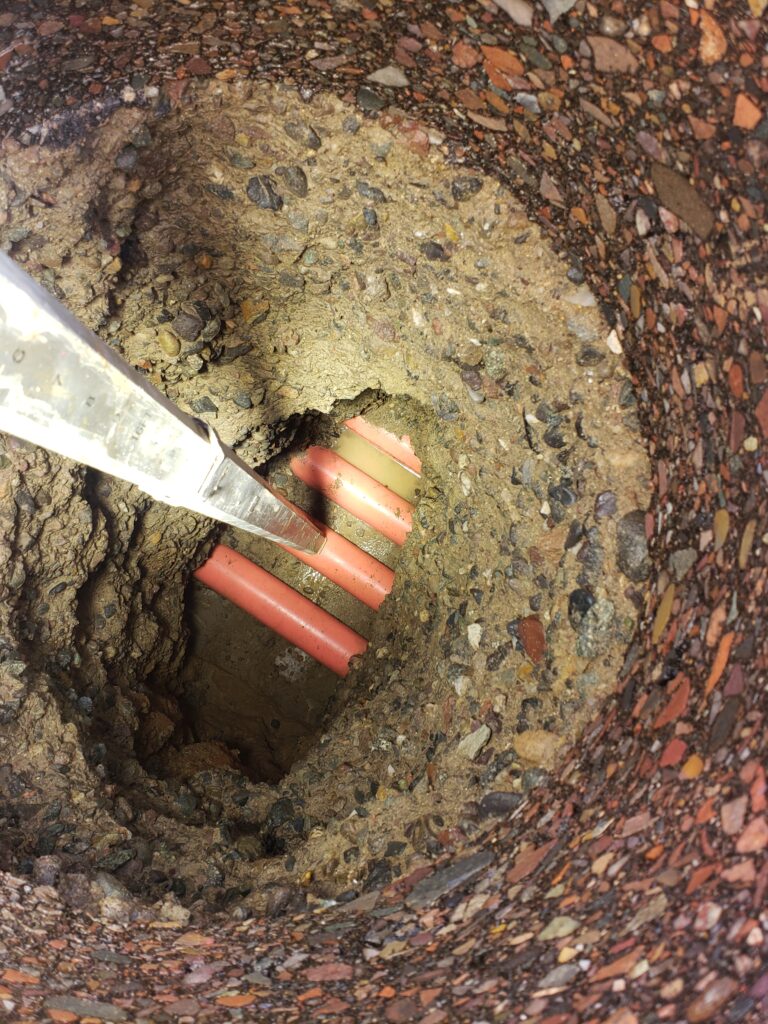
Potholing (also called “daylighting” or utility test holes) lets us verify the exact location, depth, size, material, and condition of underground utilities. We document every test hole with data and photos, then survey the exposed utilities. We feed these details directly into your design plans so engineers can avoid or relocate utilities before construction even begins.
SLOT TRENCHING
What is Slot Trenching?
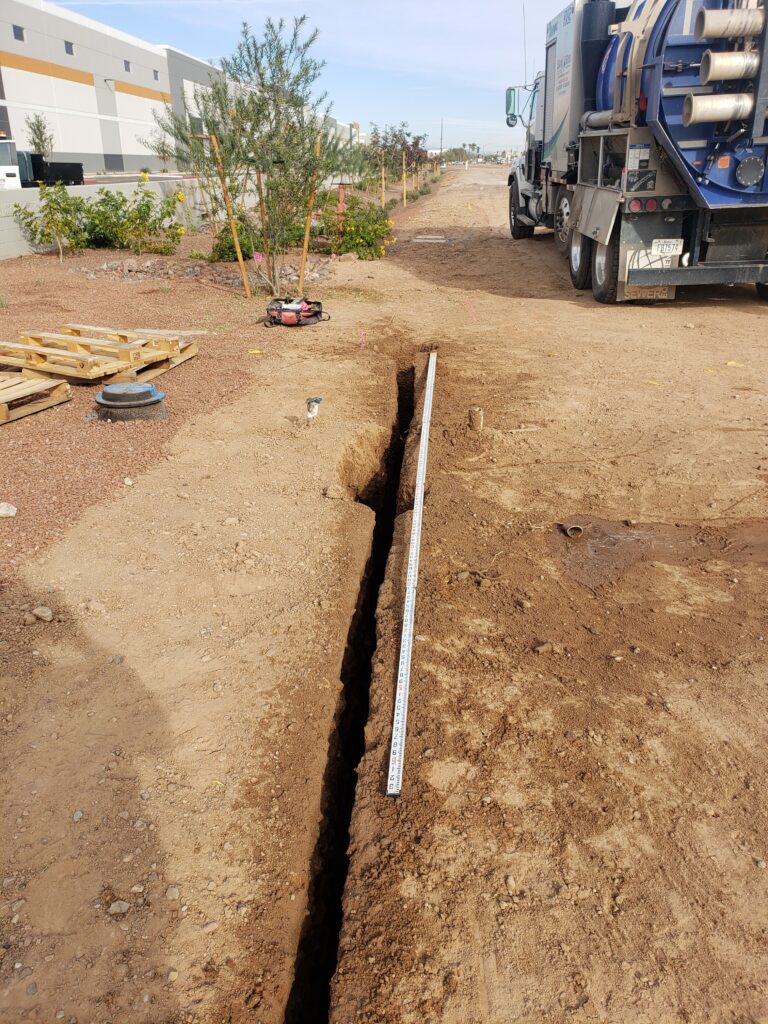
We use hydrovac excavation to dig very precise, narrow trenches in tight or congested areas. Whether you need to expose long runs of existing utilities or perform perimeter “clear” trenches (forming an X-shape), we do it to your exact specifications. That way, you can inspect, repair, or replace utilities with minimal risk.
POLE CLEARING HOLES
What are Pole Clearing Holes?
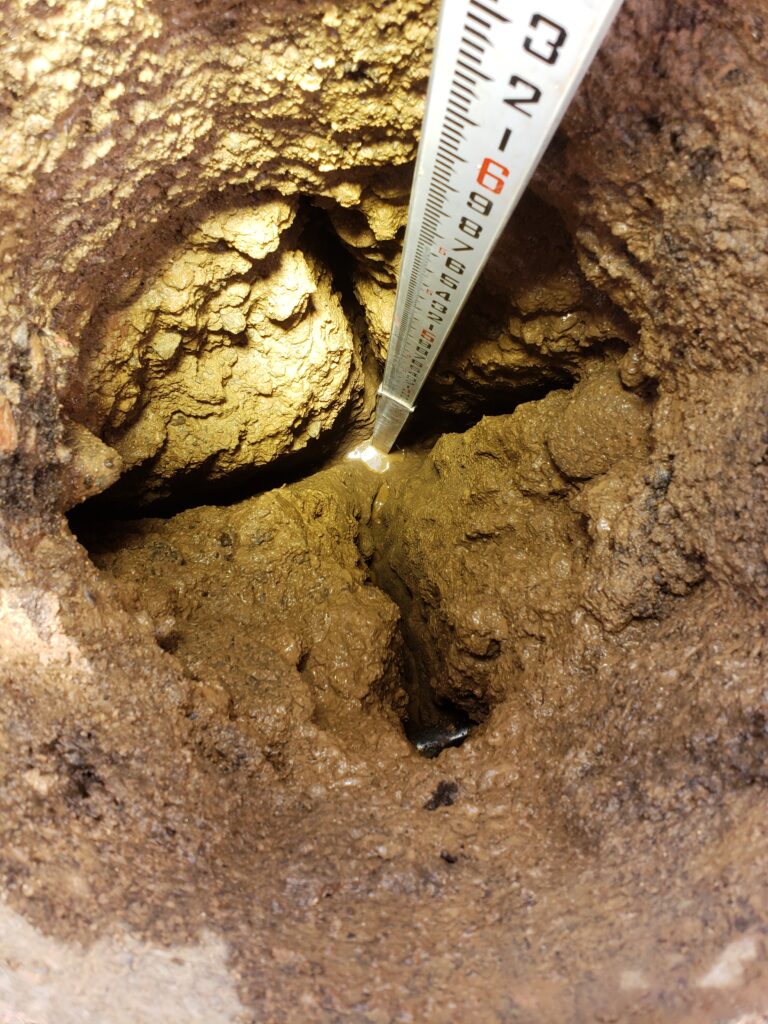
When you plan to install sign posts, utility poles, bollards, or similar structures, we dig a “clearing hole” first using hydrovac. We create two intersecting slot trenches in an X pattern to confirm that no utilities cross your planned excavation area. After we “clear” the spot, your crew can safely auger or dig without surprises.
Hydrovac Excavation
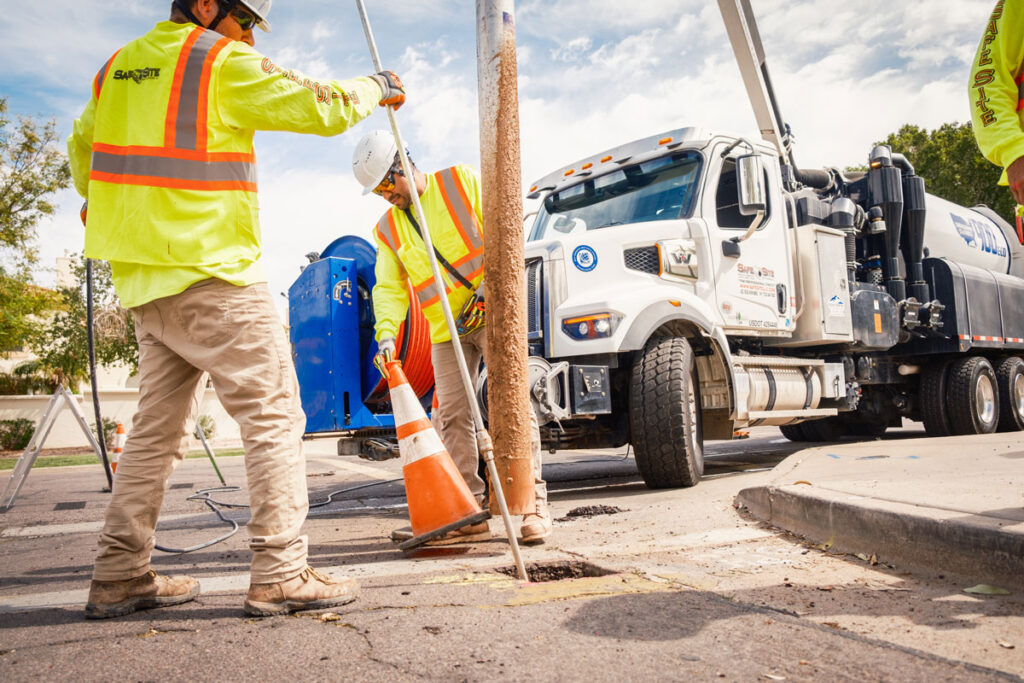
We rely on high-pressure water and powerful vacuum suction to excavate efficiently (even in hard or rocky soils, clay, caliche, or cobble-laden ground). Our vacuum units generate very high negative pressure, quickly removing the loosened material. These systems can reach depths over 20 feet and access remote or challenging areas using extended hose reach. While this wet excavation process doesn’t let you reuse the spoils immediately as backfill, the gain in productivity outweighs that cost.
Air Vacuum Excavation
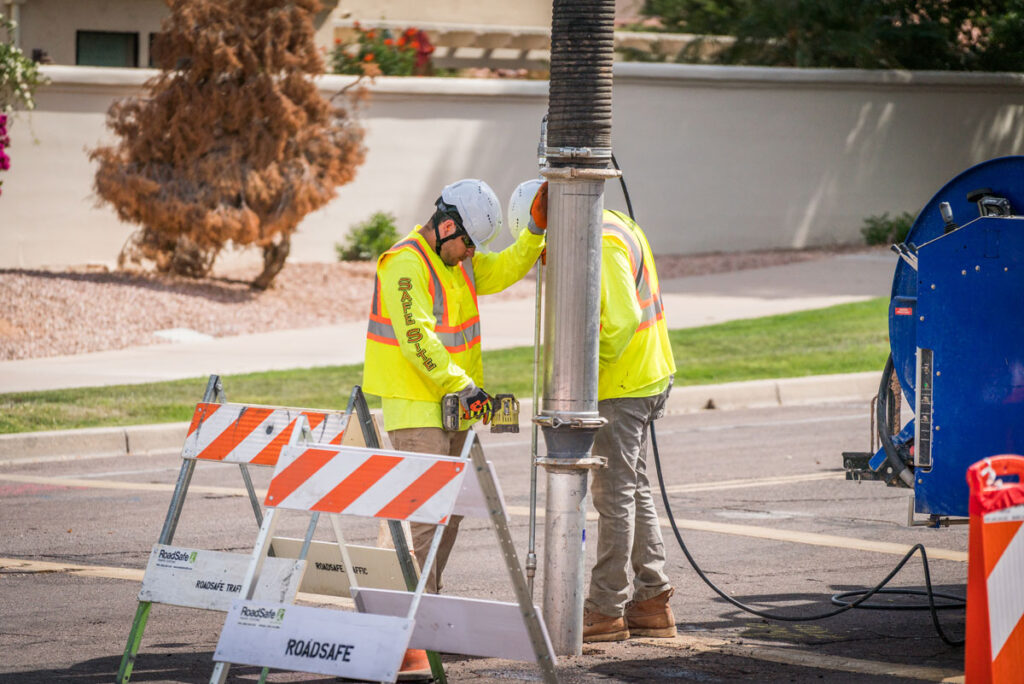
In loose or sandy soils, or when working up to about 8 feet deep, we use compressed air to break up soil and a vacuum to extract it. This method causes minimal disruption to the site, and the dry excavated material can often be reused as backfill (if permitted). We also favor this technique in areas where historic or cultural artifacts might be present, so crews can examine the soil carefully before reuse.
Benefits of Vacuum Excavation
How Vacuum Excavation Improves Your Project
Minimized Risk of Utility Strikes
Our precise, non-destructive methods reduce the chance of damaging underground utilities, protecting your project and surrounding infrastructure.
Efficient Project Completion
By using hydrovac or air excavation as needed, we speed up soil removal, trenching, and cleanup, keeping your project on schedule.
Accurate Results
Every excavation is documented with photos and data, supporting engineering, permitting, and construction planning.
Safe Work Environment
Vacuum excavation creates a controlled worksite, lowering hazards for crews and nearby personnel.
Why Clients Choose Safe Site
Choosing the right company for vacuum excavation is critical for safety, efficiency, and project success. At Safe Site, our trained crews select the optimal method and manage every step from surface cutting to debris removal. Following strict safety protocols, we document exposed utilities with photos and data to support planning, permitting, and construction, ensuring precise, controlled, non-destructive results while minimizing risks and protecting your infrastructure.
Expertise You Can Trust
We select the appropriate hydrovac or air excavation method and handle every step of the process with safety and precision.
Reduced Risk & Fewer Delays
Vacuum excavation drastically lowers the chance of utility strikes, costly repairs, and project downtime associated with traditional excavation.
Accurate, Actionable Results
We provide detailed documentation, so project teams can plan with confidence and avoid costly surprises later in construction.
Designed for Every Job Size
No project is too big or too small. We scale our equipment and crew expertise to match your needs.
Hydro Excavation vs. Air Vacuum Excavation
Not sure which one to choose?
When it comes to non-destructive digging, choosing between hydro excavation and air vacuum excavation depends on soil conditions, project scope, and safety requirements. Want to know which method is faster, safer, and more cost-effective?
Read our complete guide comparing hydro vs. air vacuum excavation.
Frequently Asked Questions (FAQs)
Some frequently asked questions to help you understand our service in details.
How is vacuum excavation different from traditional digging?
Vacuum excavation uses air or water to loosen soil and vacuums it away, rather than mechanical tools that can damage utilities. This makes it ideal for precise work near buried infrastructure.
When should I choose hydrovac vs. air excavation?
Hydrovac is typically best in hard, compact, or frozen soils. Air excavation is well-suited for loose or sandy soils, where dry spoil removal and reuse of backfill are preferred.
Is vacuum excavation safe for residential areas?
Yes, because it is non-destructive and precise, it minimizes ground disturbance and protects existing landscaping, utilities, and structures.
How long does a vacuum excavation project take?
Project duration varies based on site size, soil type, and depth of excavation. After the site assessment, we can provide an estimated timeline tailored to your project.
Do you provide documentation after excavation?
Yes. We include detailed photos and measurements of exposed utilities to help engineers, contractors, and inspectors plan the next phase of work.
Why Choose Safe Site for Hydro Jetting Services?
Safe Site delivers hydro jetting services with precision, safety, and efficiency. Our trained technicians use advanced equipment to clean pipelines while protecting underground infrastructure thoroughly. We understand how hydro jetting works with utility locating and video inspections, so we help prevent delays before they happen. When you choose Safe Site, you choose a proactive partner focused on keeping your project safe and on schedule.
Get Started With Safe, Precise Excavation
Protect your project, reduce risk, and ensure accurate underground exposure with Safe Site’s vacuum excavation services.
Contact us today for a free quote and expert guidance for your next project.